Building a Rugby Warm-Up: A 15-Minute Checklist for Players and Coaches
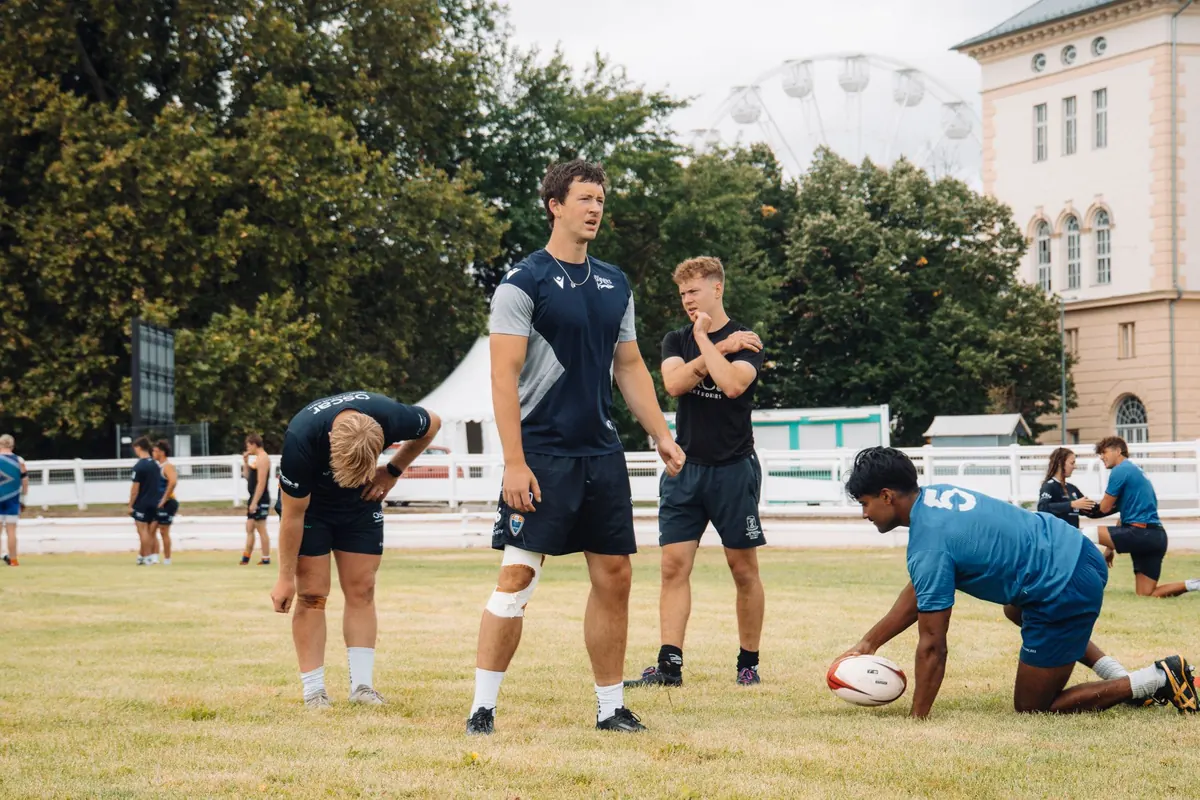
A good warm-up is not paperwork. It is the difference between a session where players move freely and one where the first twenty minutes disappear into shaking out stiffness and dropping simple passes. Fifteen minutes, done with intent, is enough to raise body temperature, switch on the muscles rugby leans on hardest, and rehearse the skills you are about to ask for at full pace.
The problem is that warm-ups drift. Someone starts jogging, someone else is still taping an ankle, and the ball work gets cut because the coach wants to get going. A checklist fixes that. Here is one you can run with a full squad, a small group, or on your own before a match.
The Shape of Fifteen Minutes
Treat the warm-up as a slope, not a switch. Intensity climbs through four blocks: raise, mobilise, activate, prime. Each one flows into the next, and nobody stands still for more than a few seconds. If a player is queuing, they are not warming up.
Minutes 0–3: Raise the Temperature
Start with continuous movement across the width of the pitch or a twenty-metre grid: jog, backpedal, sideways shuffle, high knees, heel flicks, arm swings. Forty seconds on each, straight into the next with no break. On a cold morning, add a light layer and stretch this block to four minutes. Warm muscle tolerates load far better than cold muscle, and that matters most in the first contacts of the day.
Minutes 3–6: Mobilise the Joints Rugby Punishes
Rugby asks ankles, hips, thoracic spine and shoulders to work through range while carrying load and absorbing impact. Open them deliberately rather than hoping the jog did it.
- Ankle rocks and calf raises: 10 each side, knee driving over the toe against a wall.
- Leg swings: front to back, then across the body, 8–10 each side.
- Walking lunge with a twist: 6 each side, chest tall, back knee toward the floor.
- Hip circles: 6 in each direction, hands on hips, slow and controlled.
- Thoracic rotations: kneeling or standing, 8 each side, following the hand with your eyes.
- Arm circles and shoulder sweeps: 10 small then 10 large, both directions.
Minutes 6–9: Activate the Engine Room
Glutes, hamstrings, deep core and the muscles around the shoulder blade. These go quiet after a day at a desk or a long drive in the car, and they are exactly the ones that protect knees, backs and shoulders in contact. Keep the reps low and the quality high.
- Glute bridges, 10 slow reps with a two-second squeeze at the top.
- Banded lateral walks, 10 steps each way, knees soft, hips low.
- Single-leg balance or a light Romanian deadlift, 6 each side.
- Front plank or dead bug, 20–30 seconds.
- Band pull-aparts or wall slides, 10–12 for the shoulders.
Ten controlled repetitions beat thirty sloppy ones every time. If a player cannot hold good positions here, they will not hold them at the breakdown either.
Minutes 9–13: Ball, Feet and Contact
Now add the skills. Keep the drills simple and keep everyone moving.
Handling and Footwork
- Passing in pairs while jogging, two minutes, passing both directions and concentrating on hands.
- Four-corner footwork or a short ladder sequence, three sets, low hips and quick feet.
- Evasion in a small grid, attackers beating a defender with a step, no contact.
Controlled Contact
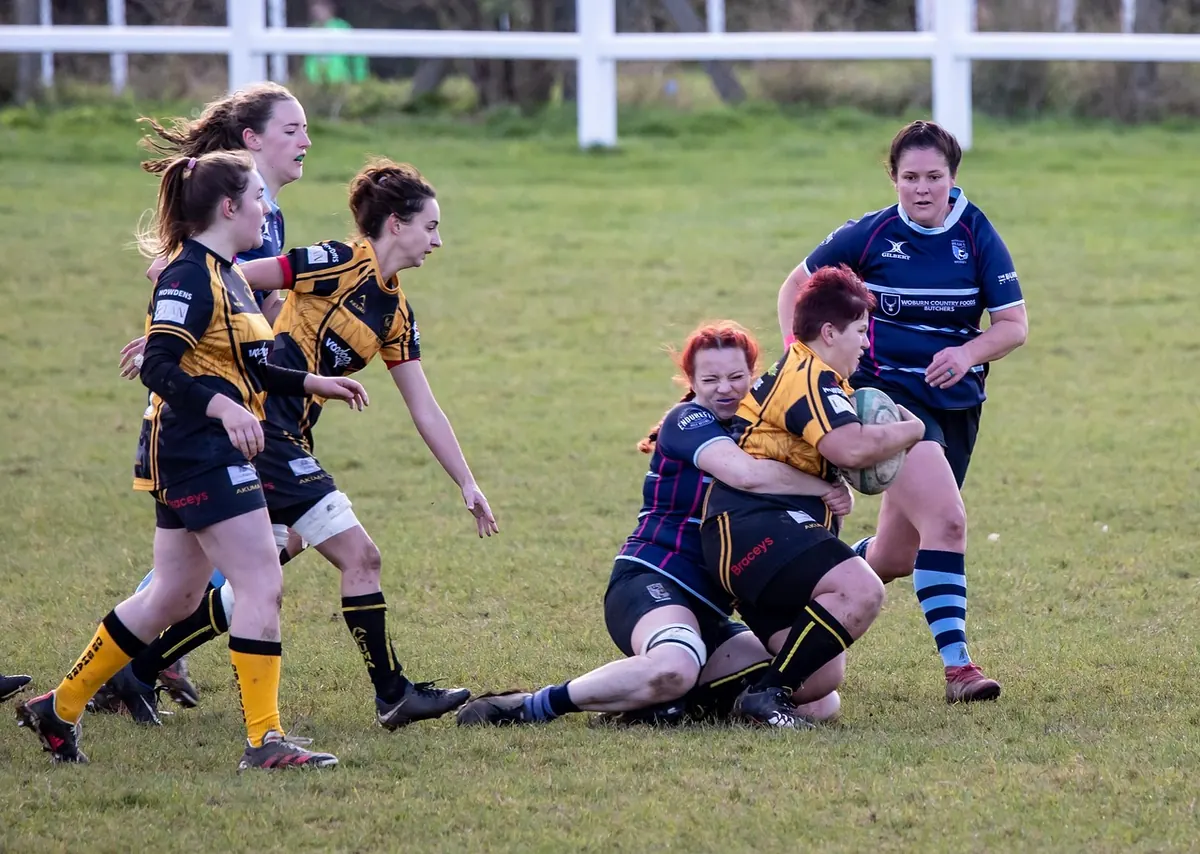
Two or three shoulder engagements on a bag, or kneeling tackle technique onto a mat, working on head position and a strong, low body shape. This is priming, not live tackling. Save the full contact for the session itself, and build it up gradually rather than going flat out on the first hit.
Minutes 13–15: Prime for Speed
Finish with two or three accelerations over 10–15 metres, building to around 80–90 per cent rather than absolute top speed. Then one sharp handling drill at full pace. If the session has a specific focus, rehearse it once: a few lineout throws, front row in position for scrum work, or your first-phase shape if you are preparing for a match. The last thing a player does in the warm-up should look like the first thing they will do in the game.
Adjust It to the Day
Cold, wet or early morning sessions need a longer raise block; warm days need more care with hydration and a slightly slower build. Backs often want extra sprint priming, forwards extra contact preparation, but both groups need all four blocks. With younger or newer players, use fewer exercises and repeat the basics more often. If someone is returning from injury, follow the plan their physio or medical staff gave them and do not skip the activation work, because that is usually the part keeping them on the field. Sharp or persistent pain needs to be assessed by a qualified professional, not warmed up and ignored.
Five Mistakes That Waste the Fifteen
- Standing in queues. Any line longer than two players is a line you can split into a second group.
- Static stretching first. Long holds belong after training, not before it.
- Going from zero to full sprint. Build through the accelerations instead of snapping hamstrings on the first one.
- Skipping the dull parts. Glutes, core and shoulders are the reason players stay available.
- Turning it into a lecture. Explain the drill once, then let them move and coach in short, loud cues.
Your Checklist Before You Start
- 0–3 min: continuous movement, no standing around.
- 3–6 min: joint mobility from ankles to shoulders.
- 6–9 min: activation, 8–12 controlled reps of each exercise.
- 9–13 min: passing, footwork and controlled contact.
- 13–15 min: two or three accelerations plus one session-specific skill at pace.
Run that sequence every session for a month and it stops being a checklist. Players start moving into it without being told, the ball work stops getting cut, and the first ten minutes of training become something you can actually coach. Fifteen minutes is not much to ask. It just has to be the same fifteen minutes, done properly, every time.
Photo: Ollie Craig / Pexels