How to Find and Join a Local Rugby Club: A Step-by-Step Guide for Beginners

Rugby has a lower barrier to entry than most people assume. You do not need to have played at school, you do not need to be fast, and you certainly do not need to be built like a front rower to walk into a local club and ask for a game. What you need is a bit of nerve the first time you turn up, and a rough idea of what happens next. Here is the practical version of that.
Start With What You Want From the Game
Rugby clubs are not one single thing. A typical community club might run two or three senior men's sides, a women's team, a veterans group, touch rugby through the summer and a minis section on Sunday mornings. Those groups have wildly different expectations, and picking the wrong one is the fastest way to a miserable first month.
So decide, honestly, what you are after. Full contact fifteen-a-side? Touch or sevens, where the fitness is brutal but the collisions are not? Just the training sessions for now, with a view to playing later? All of those are legitimate answers, and none of them make you less of a rugby player. If you have never played contact before, say so up front. Coaches deal with complete beginners every season and would much rather know than guess.
Where to Find Clubs Near You
You will usually find more options than you expect. Try these in roughly this order:
- Your national governing body's club finder. Most unions maintain a searchable list of affiliated clubs by postcode or region.
- Plain search terms. "Rugby club near me" works, but "women's rugby [your town]", "touch rugby [your city]" and "veterans rugby [your county]" get you closer to the right section.
- Social media. Club Instagram and Facebook pages tend to be more current than websites. Look at what they post week to week, not just the profile photo.
- Saturday mornings at local pitches. A walk past the nearest ground will tell you who plays there, when, and how busy it gets.
- People around you. Colleagues, gym staff, physios and the person behind the bar often know which local club is friendly and which one takes itself too seriously.
Do not automatically pick the closest club. A twenty-minute drive to a club with a team at your level beats a five-minute walk to one where you never get on the pitch.
Do a Quick Check Before You Get in Touch
Five minutes of reading saves a lot of wasted evenings. Check the training nights, whether they run a second or third team, and whether they have a section that matches you. Clubs that post team sheets, results and photos are active; a website last updated years ago is a warning sign, though not always a fatal one.
Look for any mention of new players, a "come and try" session or a contact name for newcomers. That tells you the club expects beginners and has thought about how to handle them. If the only information available is a first-team fixture list, it is still worth asking — but ask about the lower teams.
How to Contact a Club Without Overthinking It
Short and clear beats formal and elaborate. A message like this does the job:
Hi, I'm interested in joining training. I'm 24, I've played a bit of touch but never contact, and I'm free Tuesday and Thursday evenings. Is it alright if I come along to a session this week? Happy to bring boots and a gumshield.
Include your rough age bracket, your honest experience level, what you want from the club and when you are available. Ask one direct question so it is easy to answer. If you hear nothing back within a week, message again or simply turn up to a training night and introduce yourself — most clubs are run by volunteers who fit admin around work and family, and emails do get buried.
What to Expect at Your First Session
Arrive fifteen minutes early, find whoever looks like they are running things, and say you are new. That single sentence removes most of the awkwardness for the rest of the evening.
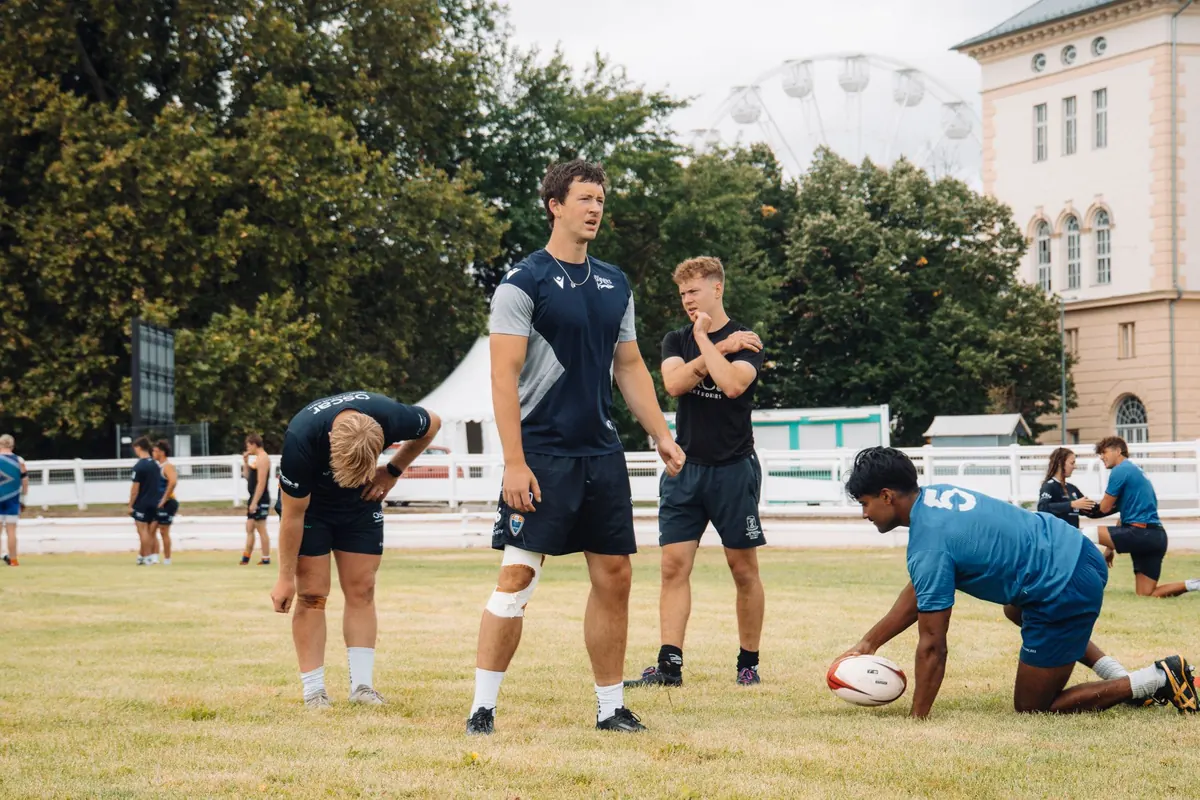
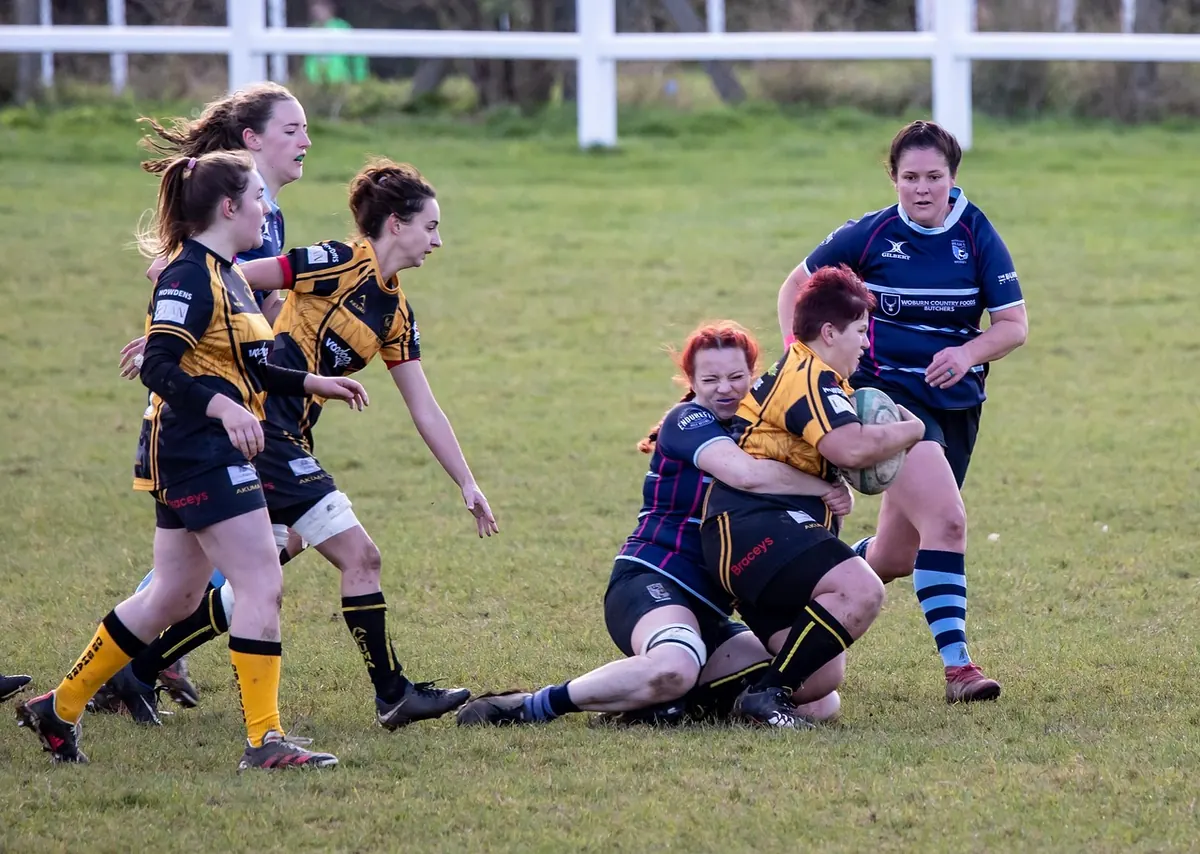
Sessions follow a fairly predictable shape: a warm-up, some handling and passing work, unit or skills drills, then conditioned games and possibly a fitness block at the end. Contact is introduced gradually, and nobody expects you to tackle properly on day one. Tell the coach about any injury or medical condition before you start. If you have a heart condition, a history of concussion or a lingering joint problem, get medical advice before doing contact training.
Bring boots with studs if you have them, trainers as a backup, water and a gumshield. Wear shorts and a top you do not mind ruining. Most clubs have spare kit and will lend you a ball or a bib without a second thought.
Your First Few Weeks: Kit, Costs and Recovery
- Go twice a week if you can. Skills need repetition, and the second session is where things start to stick.
- Ask questions. Coaches prefer a question to a guess, especially around contact technique.
- Learn names. It is the difference between being a visitor and being part of the squad.
- Expect soreness. Build in rest days and sleep properly. Being wrecked after session one is normal; being wrecked every week is a sign to ease off.
- Get your own gumshield. Most competitions require one, and a boil-and-bite model from a sports shop is a cheap starting point.
- Ask about money early. Membership fees, match fees and what they cover vary enormously between clubs, and many offer a trial period or a social membership. Get a clear answer before the season starts so there are no surprises.
The Only Real Requirement Is Turning Up
Pick one club, send one message tonight, and commit to a single session. That is the whole task. You can decide afterwards whether the culture suits you, whether the level is right and whether you want to go back — and if it is not a fit, try the next club along. Most people who drift away from rugby do so before their first training session, not after it. Once you are on the pitch with a ball in your hands, the hard part is already done.
Photo: Thiago Sepulveda / Pexels