Six Nations vs The Rugby Championship: Format, Style, and Fan Culture Compared
Two tournaments sit at the top of the international game, and they feel almost nothing alike. The Six Nations squeezes six European teams into five winter weekends, packing ancient rivalries into cold, noisy stadiums. The Rugby Championship sends four southern-hemisphere sides across half the planet in late summer and autumn, chasing dry grounds, altitude and a trophy that demands months of travel. That gap is not trivia. It shapes how the rugby is played, how the table is decided, and what a Saturday afternoon — or a Sunday morning — actually feels like. It also shapes the fan experience, from a pint in a packed Dublin pub to a 3am alarm in London to watch a Test from Buenos Aires.
Who plays, and when
Six teams contest the Six Nations: England, France, Ireland, Italy, Scotland and Wales. It runs from early February into mid-March across five rounds, and the home-and-away pattern flips every year. England host France at Twickenham one season and travel to Paris the next, which is why supporters plan their trips two years ahead. The tournament has deep roots: it began as the Home Nations in 1883, became the Five Nations when France joined in 1910, and expanded to six when Italy arrived in 2000. Every venue is a cathedral of the game: Twickenham, the Stade de France, the Aviva Stadium, Murrayfield, the Principality Stadium and the Stadio Olimpico.
The Rugby Championship is Argentina, Australia, New Zealand and South Africa, played from August into early October. Each side plays six matches — home and away against all three rivals. It began as the Tri Nations in 1996 and added Argentina in 2012. Travel is the headline: Buenos Aires to Auckland spans more than a dozen hours of time difference, and the altitude of Johannesburg is its own problem. The grounds are equally famous: Eden Park, Ellis Park, Loftus Versfeld, Suncorp Stadium and Estadio José Amalfitani. The tournament is a test of squad depth as much as starting XV quality, because no team can fly those distances week after week without rotation.
Format: how a champion is actually decided
Neither tournament ends with a final. Both are round-robin competitions decided on a points table, which is unusual in international sport and makes every match count from round one. A team can effectively seal the title in the third weekend and still have to play out the rest of the campaign with a target on its back. In the Six Nations, that means a Grand Slam hopeful can be chased all the way to Super Saturday. In the Rugby Championship, a single upset in Round 2 can leave the favourite needing favours from others.
Points and bonus points
Both use win-draw-loss points with bonus points for try-scoring and for narrow defeats. The exact triggers have been tweaked more than once over the years, so check the current season's regulations before you start doing arithmetic on the back of an envelope. The Six Nations introduced bonus points in 2017: four tries or more earns one, and losing by seven points or fewer earns another. The Rugby Championship has similar incentives, plus a bonus point for scoring three more tries than the opponent. Those small details can decide a title. In 2015, Ireland won the Six Nations on points difference after a tense final day; in 2021, Wales claimed the title with a bonus-point win in Paris. The table rarely lies, but it can be cruel.
The trophies inside the trophy
This is where both tournaments get fun. Individual fixtures carry their own silverware, and knowing the names turns a mid-table match into something with a story attached.
- Grand Slam — a Six Nations side wins all five matches. Rare, and it defines careers.
- Triple Crown — England, Ireland, Scotland or Wales beats the other three home nations.
- Wooden Spoon — last place, a label nobody wants.
- Calcutta Cup (England v Scotland), Millennium Trophy (Ireland v England), Centenary Quaich (Ireland v Scotland), Giuseppe Garibaldi Trophy (France v Italy), Auld Alliance Trophy (France v Scotland), Doddie Weir Cup (Scotland v Wales) and the Cuttitta Cup (Italy v Scotland).
- Bledisloe Cup — New Zealand v Australia, the biggest annual rivalry in the southern game.
- Freedom Cup (New Zealand v South Africa), Mandela Challenge Plate (South Africa v Australia) and the Puma Trophy (Argentina v Australia).
Add the Rugby Championship trophy itself, and you have a competition where every match has something at stake beyond the table. The Bledisloe Cup, for example, has been held by New Zealand since 2003, a run that defines an era. The Calcutta Cup has been played since 1879, making it one of the oldest international fixtures in any sport.
Style: winter grind against dry-ground speed
The Six Nations is played in February and March, in European winter. Cold, wind, rain and heavy pitches, and the rugby follows. Forward power matters. So does the scrum, the driving maul, the territorial kick and the goal-kicker who can land one from 45 metres with numb hands. Matches are frequently decided by a single score, and the last ten minutes can feel like a siege. Think of England grinding out a 12-6 win in a muddy Twickenham, or Ireland's pack battering away at the line for 20 phases. It is not always pretty, but it is brutally effective.
The Rugby Championship sits in late winter to spring in the south. Many fixtures are played on dry, hard grounds, and some at altitude, where the ball travels further and the lungs complain sooner. That tends to reward handling, counter-attack, quick ruck ball and broken-field running. The All Blacks' ability to turn a turnover into a try from 80 metres is a signature of the tournament. South Africa bring raw physicality and a relentless set-piece, Australia counter with width and creativity, and Argentina add a forward-heavy edge that has upset the giants more than once. The result is a faster, more open game on average, but with no less brutality at the breakdown.
Fan culture: from pub gardens to 3am alarms
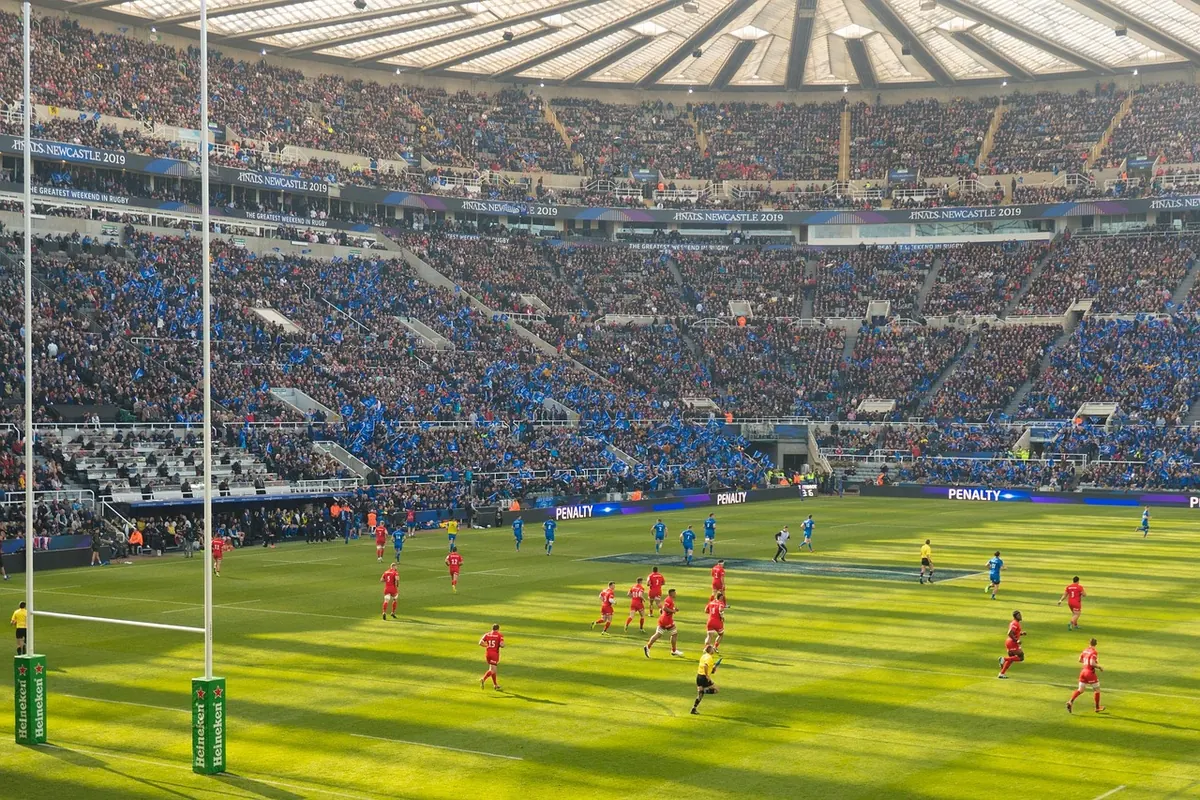
Six Nations fans live for the shared experience. Pubs in Dublin, Cardiff, Edinburgh and London overflow from early morning. The anthems — God Save the King, La Marseillaise, Ireland's Call, Flower of Scotland — are part of the theatre. Super Saturday, when all three matches kick off in quick succession, is a national holiday in all but name. Rivalries are fierce but usually good-natured, and away fans are welcomed into the host city's pubs.
Rugby Championship fandom is different. For supporters in Europe, it means early mornings or late nights. A Test in Auckland might kick off at 8am in London; a match in Johannesburg could be a 4pm start. That creates a dedicated, bleary-eyed subculture. In the southern hemisphere, the culture is built around the stadium and the braai: biltong, boerewors, and a deep knowledge of the game. The haka remains the most powerful pre-match ritual in sport, and the rivalry between New Zealand and South Africa is arguably the most intense in rugby. Argentina's fans bring drums and flares, turning the Estadio José Amalfitani into a cauldron.
The rhythm of a season, and what it demands
The Six Nations is a sprint. Five matches in seven weeks, with no room for a bad day. Players return to their clubs immediately afterwards, often carrying injuries into the business end of the domestic season. The Rugby Championship is a marathon with jet lag. Six matches across two months, with travel that can span 12 time zones. Coaches rotate heavily, blood new caps, and manage minutes carefully. That difference explains why the Rugby Championship often feels like a development ground as much as a title race, while the Six Nations is a pure test of a settled team's mettle.
Which is better? Neither. They are different answers to the same question: how do you crown the best international team in the world? The Six Nations gives you history, weather and a pub full of singing. The Rugby Championship gives you speed, skill and a 3am alarm. Together they cover the whole spectrum of the game, and that is exactly why we watch.
"The Six Nations is a war of attrition. The Rugby Championship is a chase across the world. Both leave scars." — a retired international forward, reflecting on the two tournaments.
Photo: Tom Fisk / Pexels