Common Rugby Mistakes New Players Make at Training (And How to Fix Them)

Every new player has a training session that teaches more than they expected. A pass lands behind the runner. A tackle slides off and the ball carrier keeps going. Someone shouts "man on" a heartbeat too late. None of that is a problem on its own. What holds players back is repeating the same four or five mistakes for months because nobody has explained what the fix should feel like.
Most of these errors come down to footwork, body height and timing rather than strength or talent. Here is what to look for, and what to change.
Passing: Get the Ball Out of Your Hands Faster
Passing problems at training usually share one root cause: the ball spends too long in the hands. New players catch it flat-footed, take a breath, then throw. The defence reads it, the receiver has to check their run, and the attack stalls before it starts.
Three habits fix most of it:
- Step toward the target. Move into the pass with the foot nearest the direction the ball is going. Standing still forces you to throw with your arms only, which is where the floating, looping pass comes from.
- Keep the ball off your chest. If it touches your sternum, your elbows are pinned in and you cannot release cleanly. Hold it out in front, with your back hand behind the ball and your front hand pointing at the receiver.
- Finish pointing at the target. Both hands should end where you wanted the ball to go. If they finish across your body, the pass has gone behind the runner.
Catching deserves equal attention. Get your hands up early, fingers spread, and take the ball in front of your chest rather than letting it hit you. Then remember that a pass is a shared job: the receiver has to give you something to aim at, calling for the ball before you have picked it up, not after.
Tackling: Low, Side-On, Driving Through
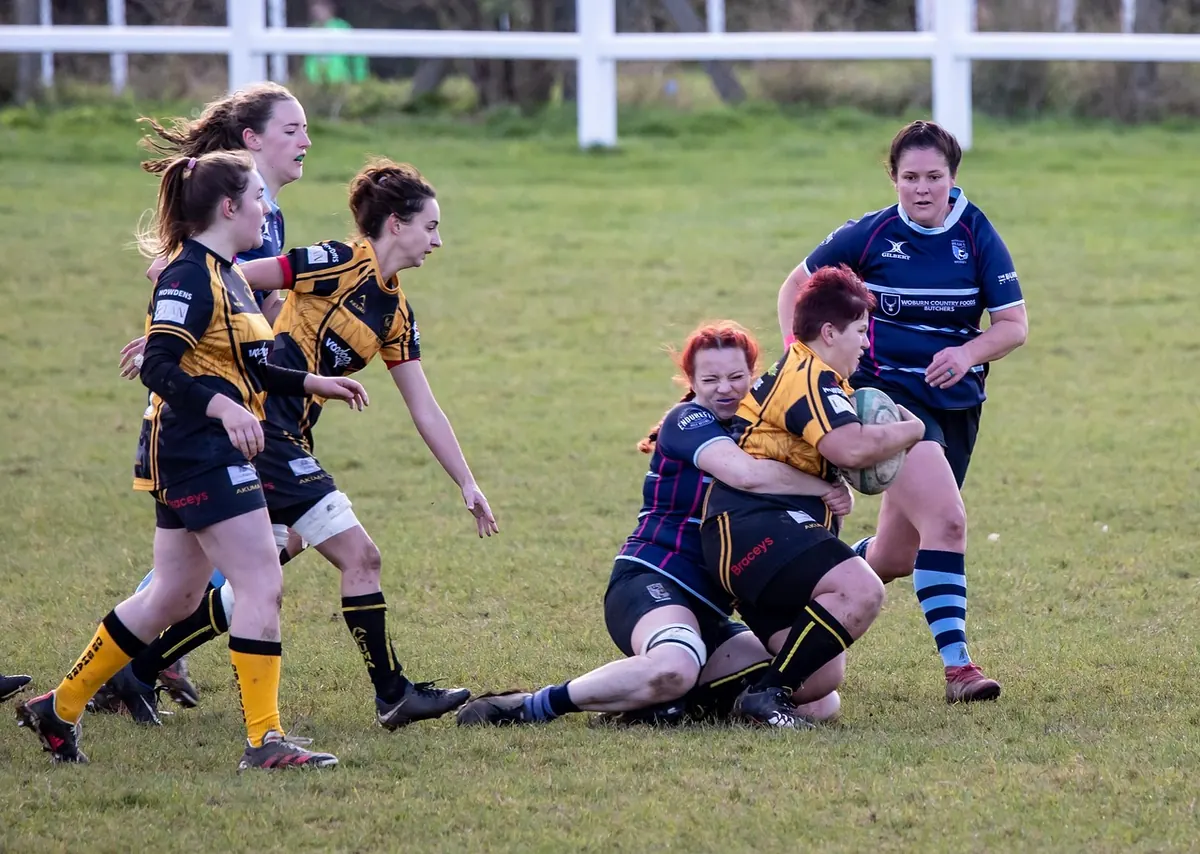
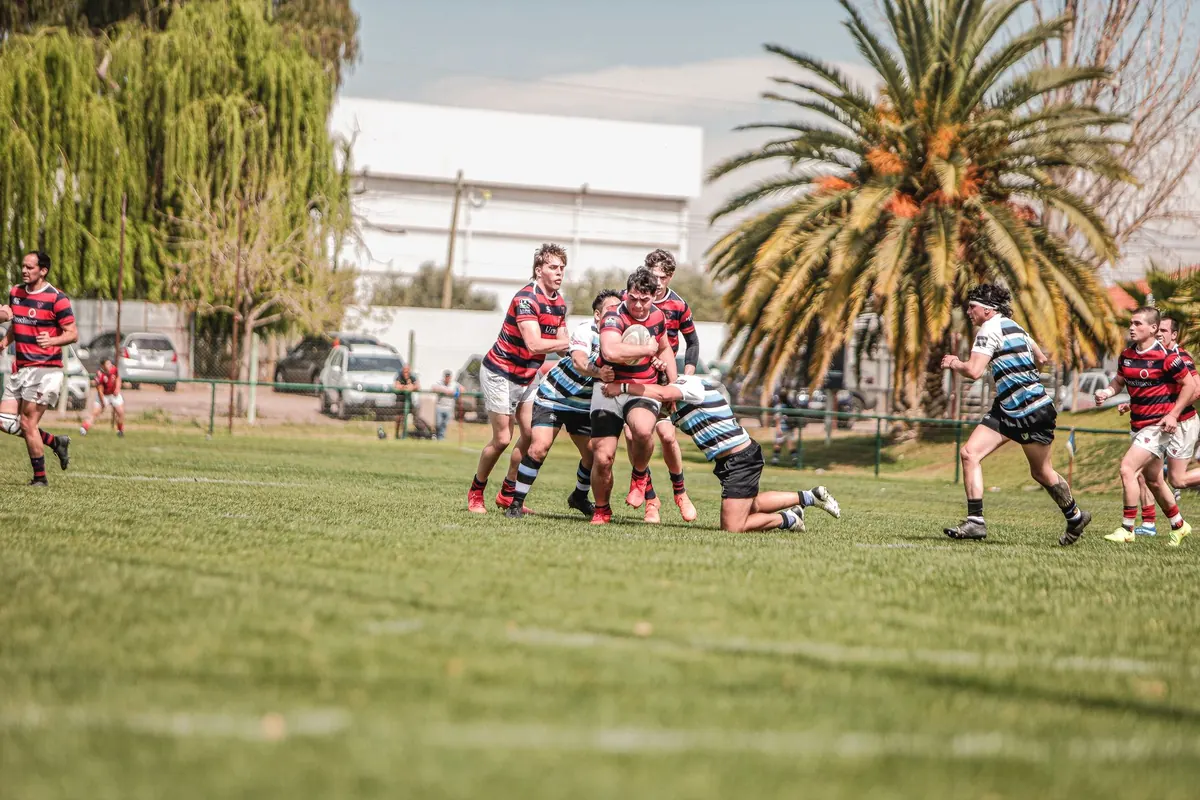
The classic new-player tackle is high and hopeful. The arms reach, the feet stop, and the ball carrier runs straight through the contact. It feels like a strength problem. It is almost always a technique problem.
Work on this checklist:
- Target the thighs and shorts, not the chest. Low tackles are easier to finish and safer for you.
- Head to the side, never in front. Your cheek should end up near the ball carrier's hip, with your face clear of the contact.
- Wrap and squeeze. Arms alone will not stop anyone; the grip has to close.
- Keep your feet moving. A tackle that stops the moment you make contact allows the carrier to drive through you.
Ask your coach to run a proper progression on bags before you go into full contact, and build up from there. If you take contact to the head or neck, or feel dizzy or unwell afterwards, stop and tell the coach. That needs proper medical assessment, not a rest and a shrug.
Ruck Body Height: Bend the Knees, Not the Waist
At the breakdown, new players arrive standing up. Their instinct on contact is to push with their arms while staying tall, which loses the collision and often the ball as well. Height is the single biggest difference between a player who clears a ruck and one who gets pushed off it.
Aim for a position where your knees are bent, your back is flat and angled forward, your elbows are close to your ribs, and your feet are shoulder-width apart. Take short, powerful steps rather than a long stride. If your chin is up and your chest is out, your hips are too high.
Two related habits to break. First, arriving late: get to the contact before the defender sets, because a ruck is decided in the first second. Second, planting your hands on the grass when you compete for the ball. Put them on the ball or on the opponent instead. The floor does not help you.
Offside: The Mistake Nobody Owns Up To
Offside in training is rarely one dramatic error. It is a series of half-steps: drifting a metre early at the ruck, standing ahead of the kicker, being a lazy runner after a penalty. Nobody means to do it, and everyone in the defensive line suffers for it.
Know your reference points, and check the details with your coach for the level you play:
- At a tackle or ruck, you are onside when you are behind the hindmost foot on your side.
- At a penalty, defenders retreat ten metres or to their own goal line.
- After a kick, players in front of the kicker are offside until they are put onside or retire.
- At a lineout and a scrum, non-participants must be well behind the action, not hovering on the edge of it.
The practical fix is simple: after every whistle, look at your feet before you look at the ball. Then step back one more pace than you think you need. Nobody ever lost a defensive set by being a metre too deep.
Communication: Short, Early, Loud, Useful
Training tends to be quiet, and new players assume someone else will call it. That assumption is how overlaps get missed and how runners get hit from behind.
Build a small vocabulary and use it constantly: ball, man on, hold, wide, next, pass. Say it early. A call that arrives after the pass has been thrown is not information, it is commentary. The passer speaks first and loudest, because they can see what is coming. Everyone else listens, and nobody shouts over the top of the person carrying the ball.
You do not need a big voice to be heard. You need one clear word at the right time.
Fix One Thing at a Time
Trying to correct passing, tackling, ruck height and offside in the same session leaves you thinking about everything and doing nothing well. Pick one focus each week.
- Choose your focus before you arrive, so you are not deciding mid-drill.
- Tell your coach what you are working on and ask them to watch for it.
- Repeat one correction until it feels automatic, even if the rest of the drill is sloppy.
- Ask for a single sentence of feedback at the end of the session, not a full review.
- Watch the best player in your position and copy one habit they have.
Rugby rewards repetition more than talent in the early months. Turn up, pick one thing, fix it, and come back for the next one. That approach beats trying to be brilliant at everything in a fortnight.
Photo: Vladvictoria / Pixabay