Rugby Scoring Checklist: Try, Conversion, Penalty, Drop Goal, and Bonus Points Explained

A 19-17 scoreline hides a dozen small decisions. Did the captain take the three points on offer, or kick to the corner? Did the winger ground the ball before the touchline? Did a fly-half's drop goal wobble over off the inside of the post? Rugby's scoring system is compact — five regular ways to score, plus bonus points in most leagues — but the arithmetic built from it settles matches every weekend. Here is the full checklist, in the order teams normally use it.
The Scoring Checklist at a Glance
Every scoreline in the sport is assembled from these six items:
- Try — 5 points. Grounding the ball in the opponent's in-goal area.
- Conversion — 2 points. A kick at goal after a try, from the tee.
- Penalty goal — 3 points. A kick at goal from a tee after a penalty.
- Drop goal — 3 points. A drop kick at goal during open play.
- Penalty try — 7 points. Awarded by the referee when foul play stops a probable try.
- Goal from a mark — 3 points. Legal, but so rarely attempted that most players never see one.
Stack those together and you get the familiar totals: a converted try is 7, a try plus a penalty is 8, two converted tries are 14. Nothing else on the scoreboard needs explaining.
The Try: Five Points, Earned the Hard Way
A try is scored when an attacking player grounds the ball in the opposition's in-goal area — on or behind the try line, between the touchlines and before the dead ball line. Grounding means pressing the ball down with the hand, or falling on it with control. The margins are unforgiving. Put a toe in touch before you ground it and the try is wiped out; spill the ball forward over the line and you have knocked on instead.
Because a try is worth only five points until it is converted, the chase for it shapes tactics. A team trailing by six with a penalty on the 22 has a genuine choice: take the near-certain three points, or kick to the corner for a lineout and try to drive over for five or seven. Coaches tend to take the points early and chase tries late, when the clock forces the issue.
The Conversion: Two Points From the Tee
After a try, the scoring team gets one shot at goal worth two points. The kicker may place the ball anywhere on a line parallel to the touchlines, drawn back from where the try was scored. Score under the posts and it is a simple kick from straight in front. Score in the corner and the ball sits near the touchline, with the angle narrowing as the kicker walks further back.
Three practical details matter:
- The kick must be taken within 60 seconds of the try being awarded, so the tee arrives fast and the kicker settles early.
- Opponents must retreat behind their own goal line and cannot charge the ball down.
- Whether it goes over or not, the team that conceded restarts play with a drop-out from its own 22.
A kicker who converts from wide positions is worth roughly a try a game to his team across a season. That is why goal-kicking practice is treated as a separate skill, not an afterthought.
Penalty Kicks and Penalty Tries
When a team is awarded a penalty, the captain picks one of four options: kick at goal from a tee, kick for touch and a lineout, take a scrum, or tap and run. A successful shot at goal is worth three points, and the mark is wherever the offence happened, so a penalty just outside the 22 is close to a formality for a good kicker.
Opponents cannot charge a penalty kick at goal, and the kicker again has 60 seconds once the referee indicates the mark. The decision gets sharper as the match tightens — three points is often enough to level or win a game in the last ten minutes, and a captain who gambles on a corner lineout and comes away empty-handed will hear about it.
The penalty try
If foul play — a high tackle on a player about to score, collapsing a driving maul heading for the line, deliberate offside in the same situation — stops a try that probably would have been scored, the referee runs under the posts and awards a penalty try. It is worth seven points, with the conversion treated as automatically successful and no kick taken. The offending player is usually sent to the sin bin as well, so the cost is double.
Drop Goals: Three Points in a Single Moment
A drop goal is worth three points and can be attempted at any point in open play, which is what separates it from a penalty or conversion: nothing needs to be awarded first. The ball must be dropped and struck as it bounces off the ground. A place kick will not count.
Teams set it up deliberately, usually from a ruck inside the opposition half. A forward screen holds the defenders, the scrum-half delivers clean ball, and the fly-half sits deep enough to strike without being charged. It is the classic play for a side that is one or two points behind with the clock running down, and it is also the reason defending teams push hard on the fly-half in the last five minutes.
Bonus Points: Where Leagues Diverge
Bonus points exist to reward ambition, but they are competition-specific, so check the rules of the league you are watching. The most common system gives one bonus point for scoring four tries or more, and a second one for losing by seven points or fewer.
Typical league variations
- Four-try bonus: one point for scoring four tries regardless of the result.
- Losing bonus: one point for a defeat by seven points or fewer; a few competitions use a smaller margin.
- No bonus points at all: straight win-draw-loss points, as in knockout rugby.
- Clean-sweep rewards: some competitions add extra points for winning every match in a campaign.
- Sevens: a try is 5 points and conversions are drop kicks worth 2, with no bonus points.
The four-try bonus is the reason a team leading comfortably may keep the ball in hand instead of kicking a penalty late on. Three points can be worth less than the try that brings a bonus point with it.
Keeping the Maths Straight on Match Day
Rugby rewards fans who track the gap between the teams, not just the total. Here is the quickest way to convert a deficit into a plan:
- Two points behind: a penalty or drop goal wins it.
- Three behind: a penalty levels the game; a try wins it.
- Five behind: a try levels it, a converted try wins it.
- Seven behind: a converted try levels it. Kick the conversion from in front and the game is tied.
- Eight behind: a converted try plus a penalty, or a drop goal alongside the try.
- Ten behind: a converted try and a penalty.
- Fourteen behind: two converted tries.
Two habits help. First, add seven for every try the moment it is scored, then subtract two if the conversion misses — you will rarely be more than a point out. Second, watch the clock alongside the score. Ten points down with eight minutes left is a different problem from ten points down with two, and it changes whether the fly-half drops into the pocket or the captain points at the posts.
Scoring in rugby is not complicated, but it is unforgiving. Miss the conversion, turn down the three points, fumble the grounding, and the final score will tell the story even if nobody else does.
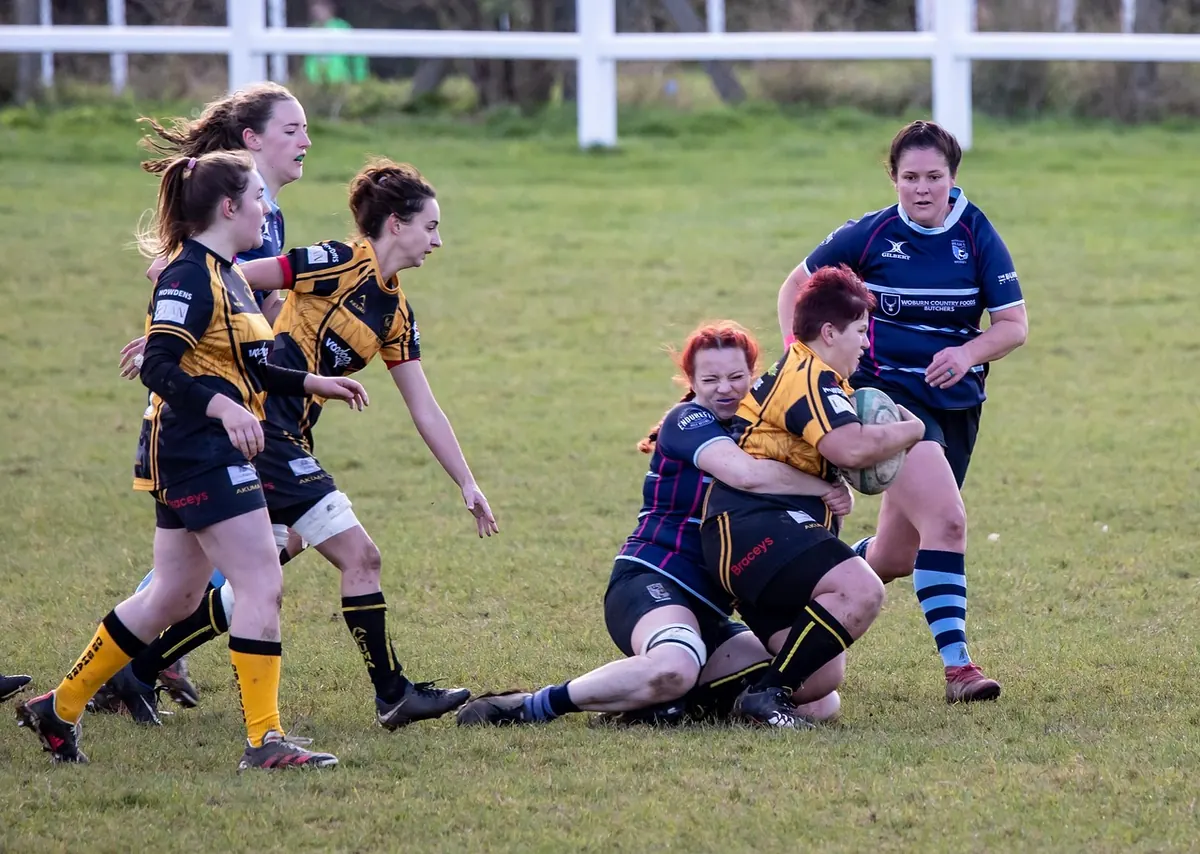
Photo: 12019 / Pixabay