Rugby Union vs Rugby League: A Beginner's Guide to the Key Differences
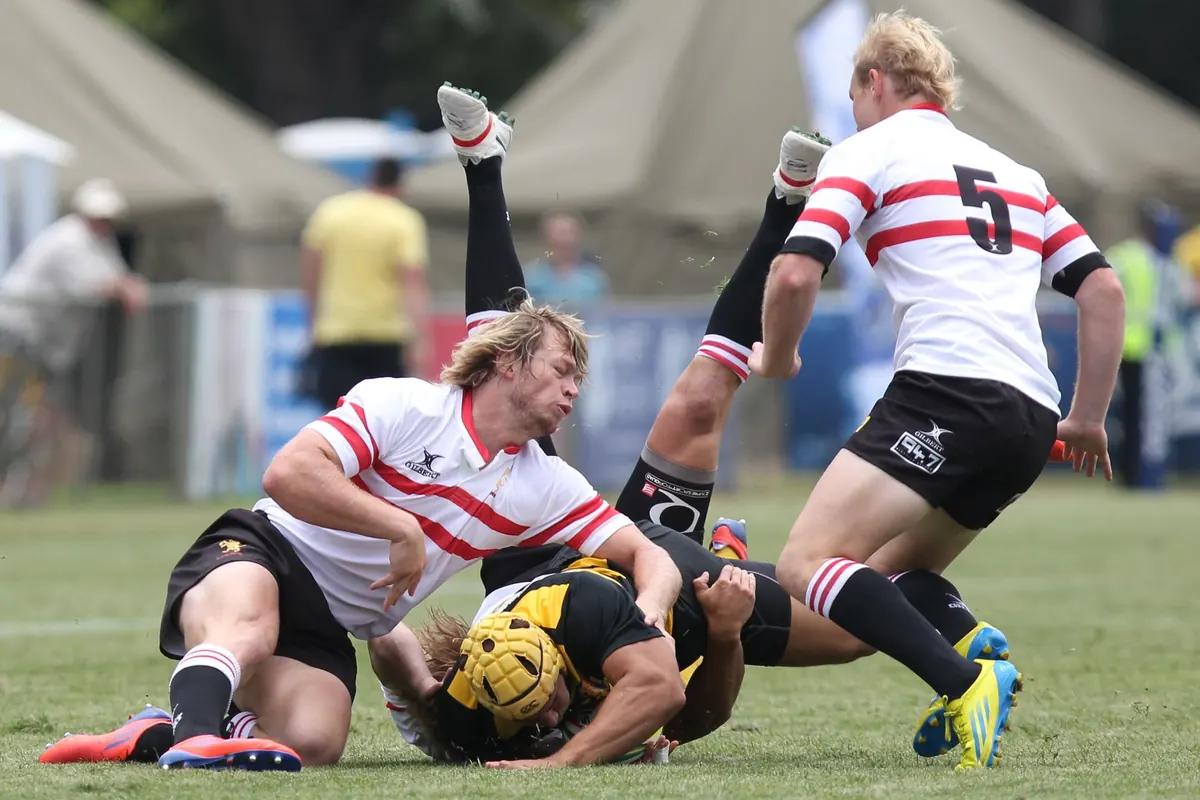
Two teams, one oval ball, H-shaped posts at either end, and a scrum that looks broadly similar from the back of the stand. Then the whistle goes, and the two sports called rugby part company so quickly that a newcomer can feel like they have wandered into a different game. They have. Union and league share an ancestor and a vocabulary, but the laws that decide how the ball moves, how points are scored and how a team wins possession are genuinely different. Here is what actually changes when you switch codes.
Where the Two Games Came From
Rugby union and rugby league split in 1895, when clubs in northern England broke away from the Rugby Football Union over payments to players who lost wages by taking time off work. That breakaway body eventually became the Rugby Football League, and its game developed its own laws from there.
More than a century later, both codes are fully professional and both have a World Cup, but they grew up separately. Union's biggest stages are the Rugby World Cup, the Six Nations and club competitions such as the Champions Cup and Super Rugby. League's centre of gravity sits with the NRL in Australia and Super League in Britain, alongside the State of Origin series. Watching one tells you surprisingly little about the other.
Scoring: Five Points or Four?
The point values are the fastest way to tell which code you are watching.
- Union: try five points, conversion two, penalty three, drop goal three.
- League: try four points, conversion two, penalty two, drop goal one.
A converted try is therefore worth seven in union and six in league, which shifts how coaches think. Both codes take conversions from in line with where the try was scored, so grounding the ball under the posts still matters. Drop goals tell a similar story: in union a three-point drop goal often settles a tight Test in the closing minutes, while league's one-point field goal exists almost entirely to break a tie in the last seconds.
The Tackle and the Ruck: The Big Divide
If you learn one difference, learn this one. It explains almost everything else about the two games.
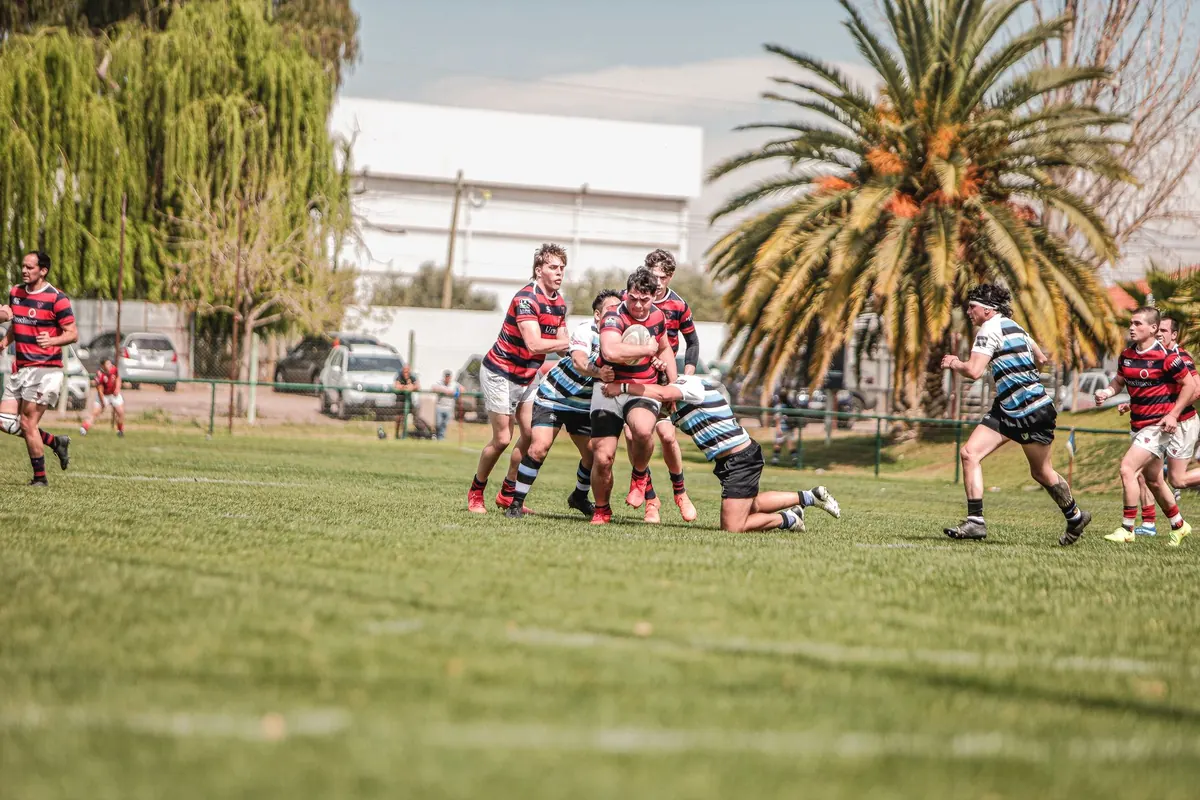
In union, a tackle starts a contest. The tackler must release the ball carrier and roll away, and both teams can fight for possession on their feet, so a defender can get over the ball and win a penalty or steal it outright. Once teammates arrive, a ruck forms, and there is no limit on how many phases a team can run. Sides can keep the ball through twenty or more phases if their legs and discipline hold up.
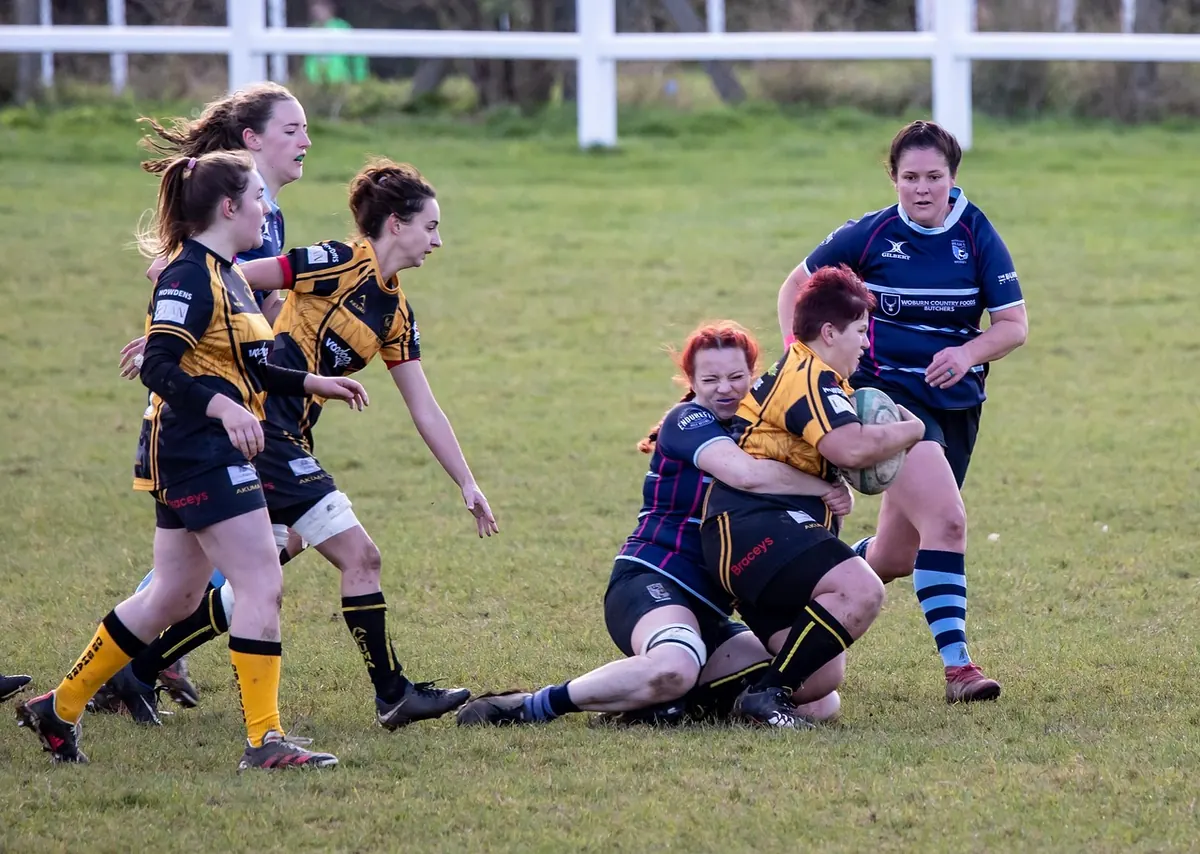
In league, a tackle simply ends a play. The defender clears the area, the tackled player gets to his feet and plays the ball backwards with his foot to a teammate behind him, and two markers stand square in front to defend. Nobody can rip the ball loose on the ground and there is no ruck to contest. Instead, possession changes hands on the sixth tackle through a handover, unless a team kicks on its last set.
Scrums, Lineouts and Set Pieces
Union scrums are contested: eight forwards a side, bound and pushing, with a hooker striking for the ball and penalties awarded for collapsing, popping up or engaging early. Then there is the lineout, which has no equivalent in league at all — a throw down the middle of two lines of jumpers, with lifting allowed. The rolling maul that often follows a lineout is one of union's most distinctive sights and one of the hardest things to stop legally.
In league, a scrum is a restart rather than a contest. Six forwards pack down, the ball is fed in and heeled back, and play simply continues. Nobody pushes for possession, and there are no lineouts. When the ball goes into touch, play restarts with a scrum, a handover or a tap depending on how it went out.
Players, Positions and the Bench
Union runs fifteen players a side, split into eight forwards and seven backs. League runs thirteen, with six forwards and seven backs, and league forwards handle far more of the ball in short, repeated bursts.
- Union forwards: two props, hooker, two locks, two flankers, number eight.
- Union backs: scrum-half, fly-half, two centres, two wings, full-back.
- League forwards: two props, hooker, two second-rowers, loose forward.
- League backs: scrum-half and stand-off, two centres, two wings, full-back.
The bench differs too. Union names up to eight replacements and can use all of them, which lets a coach swap an entire front row mid-match. League benches four players with a cap on how many interchanges a team can make, so a player who comes off usually stays off — unless it is a head injury assessment or a nominated eighteenth man.
The Differences at a Glance
- Numbers: fifteen a side in union, thirteen in league.
- Possession: contested at every tackle in union; six tackles then a handover in league.
- Scrums: contested, eight against eight in union; uncontested restarts in league.
- Lineouts: a central union set piece; absent from league.
- Tackle area: ruck, jackal and penalty risk in union; play-the-ball with two markers in league.
- Typical rhythm: long phases, territorial kicking and set-piece pressure in union; fast sets, hard carries and a kick on the last in league.
How to Watch Your First Match
Pick one code and stay with it for three full matches before trying the other, because the shared vocabulary is exactly what trips people up.
In league, follow the tackle count. It appears on the scoreboard and in commentary, and once you feel the sixth tackle approaching, the shape of the game becomes obvious. Watch what the attacking team does on the last: kick deep, kick short, or gamble. That single decision drives most of the tactics.
In union, watch the referee at the breakdown. Calls like "release", "hands away" and "no hands" decide how the next minute unfolds, and penalties there are worth three points or a lineout drive. Learn two or three signals — forward pass, knock-on, offside — and the rest fills in quickly.
Above all, give yourself permission not to understand everything at once. Both codes reward patience, and the moment the tackle count or the breakdown clicks, the game stops looking chaotic and starts looking designed.
Photo: Patrick Case / Pexels